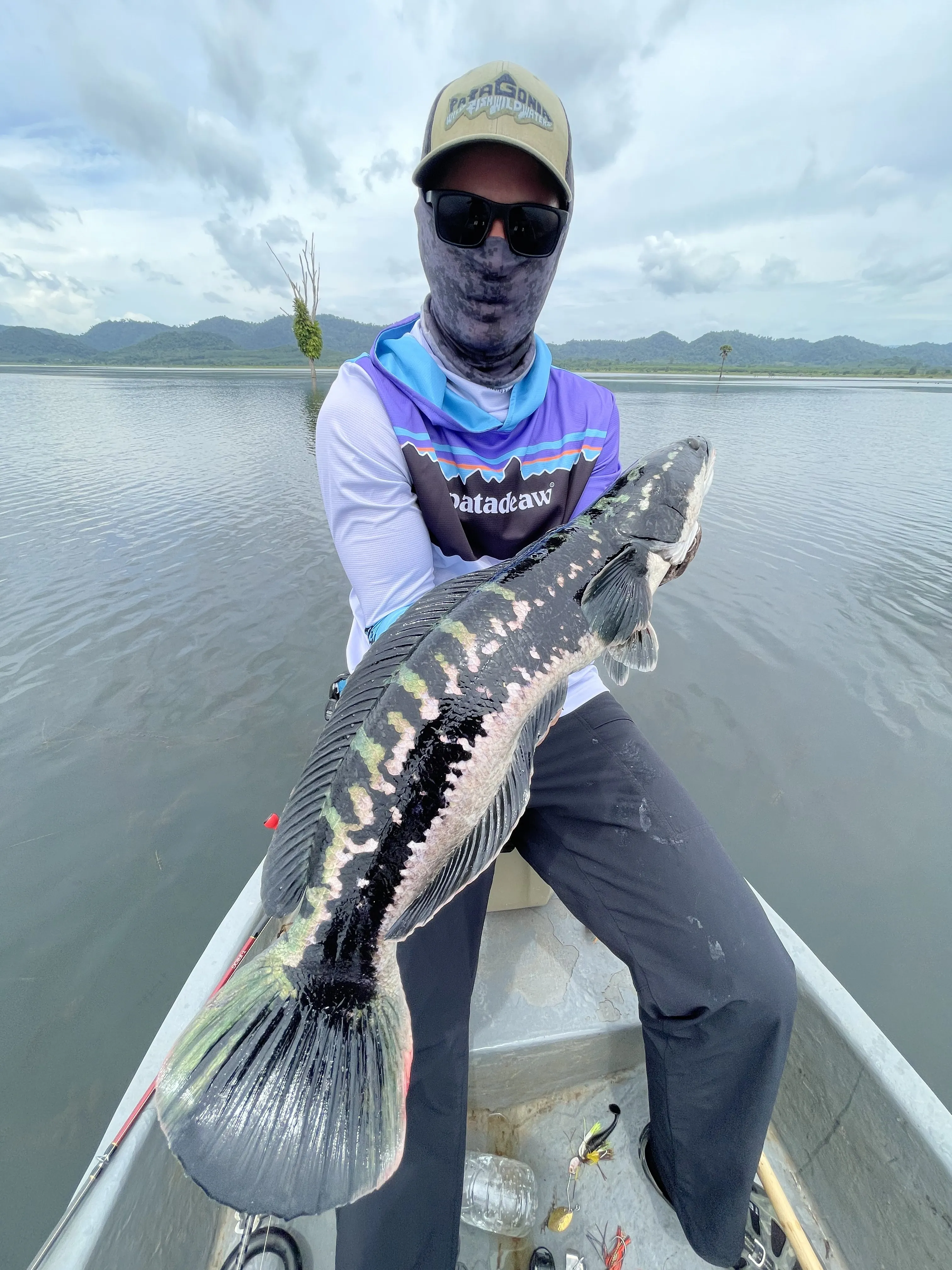
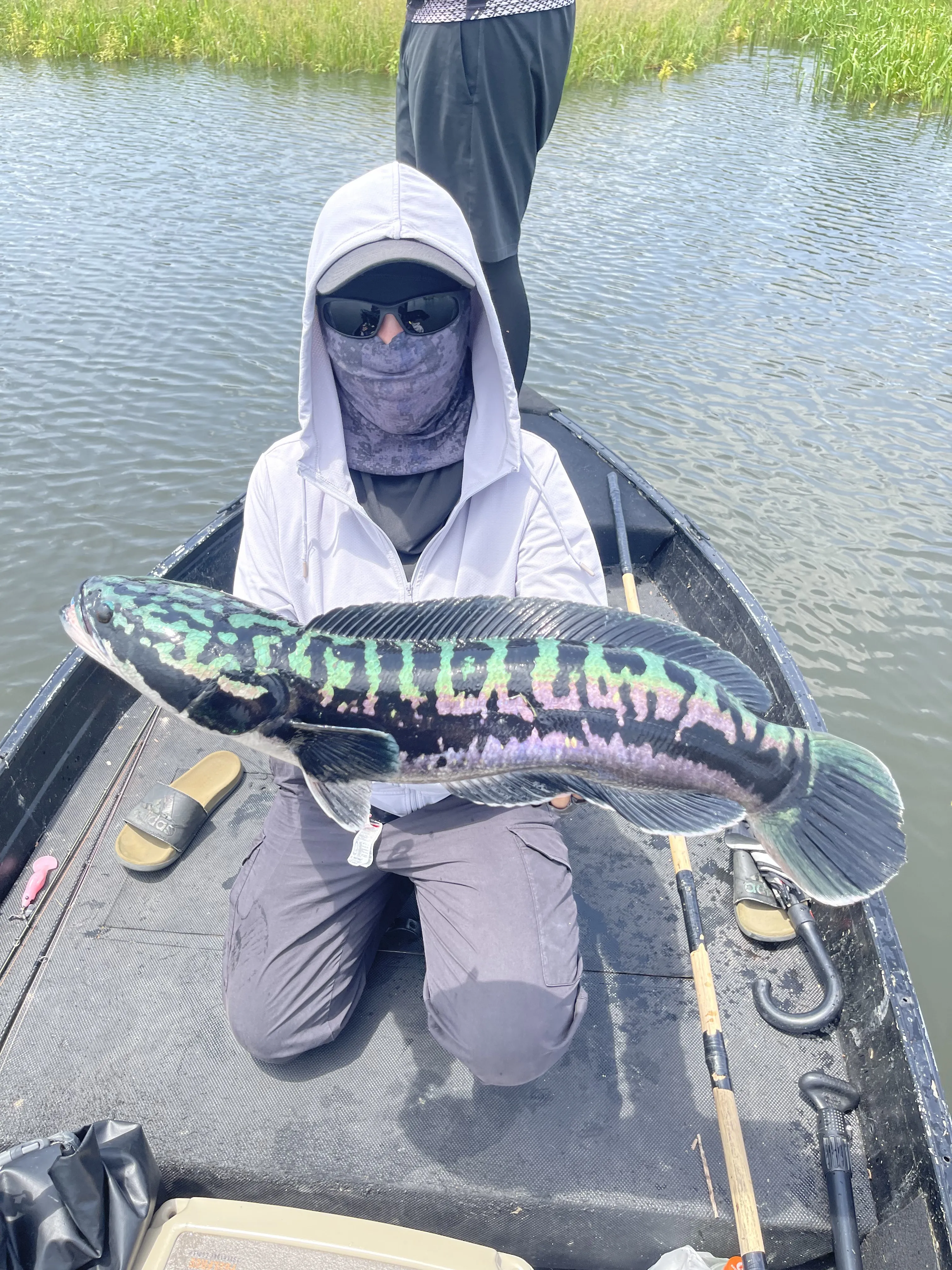
Giant Snakehead Fry Ball Fishing in Chanthaburi During the Rainy Season
Intro
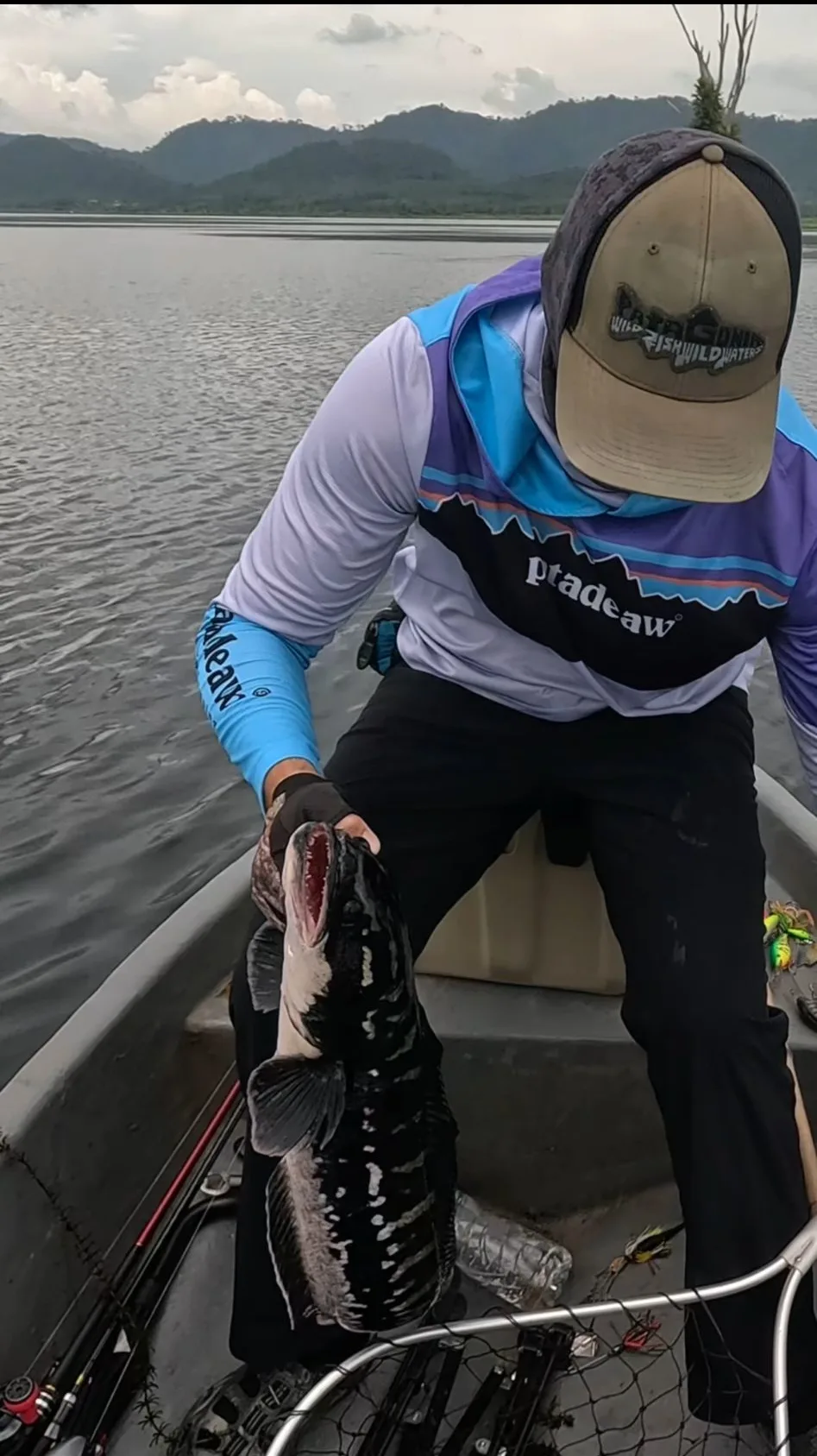
Fishing for a giant snakehead during the rainy season in Thailand is all about patience, positioning, and reading fish behavior around fry balls.
Last season, I spent a long morning on a reservoir in Chanthaburi targeting a mama giant snakehead holding near a fry ball in flooded grass. Rising water levels had pushed fish deep into newly submerged cover, and she stayed locked into that zone for hours.
After two solid hours of casting, adjusting lure choice, and staying tight to the fry ball, I finally got the bite.
This is exactly the kind of situation where persistence matters with giant snakehead fishing in Thailand.
Starting With the Rapala Risto
I began the session throwing a green Rapala Risto 9 across the open water edges near the fry ball.
The fish was moving between sparse grass lines and open pockets, so I wanted something that could cover water while still running shallow enough to avoid constantly fouling up.
I couldn’t risk full exposure treble hooks deep in the grass, so casts had to stay precise.
Eventually, she committed once.
It was only a single strike, but it told me she was still actively guarding the fry.
The problem was the missed hookup. Once she felt pressure, she bolted straight back into the thick cover.
That changed the entire approach.
Switching to a Spinnerbait for Heavy Grass
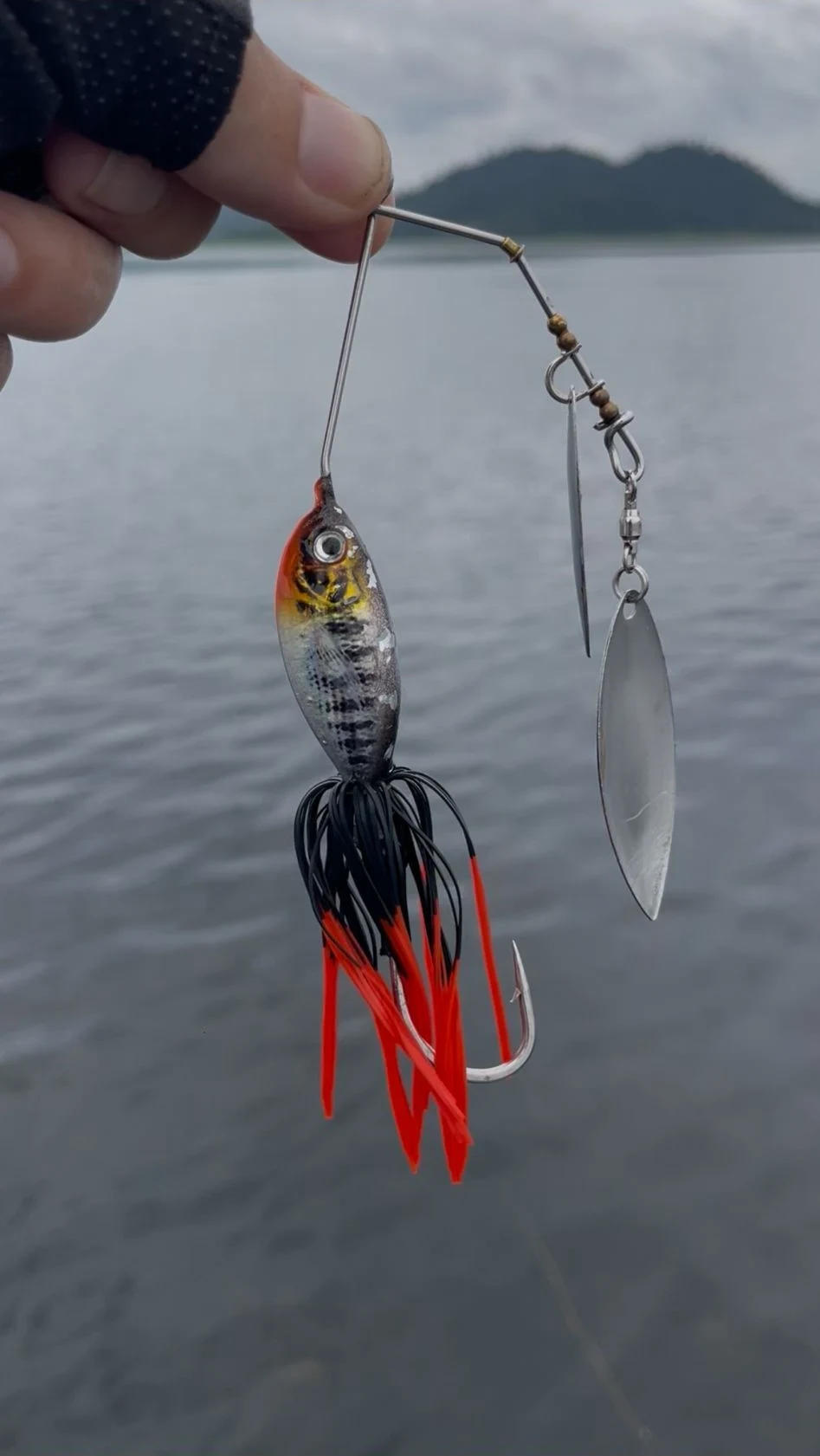
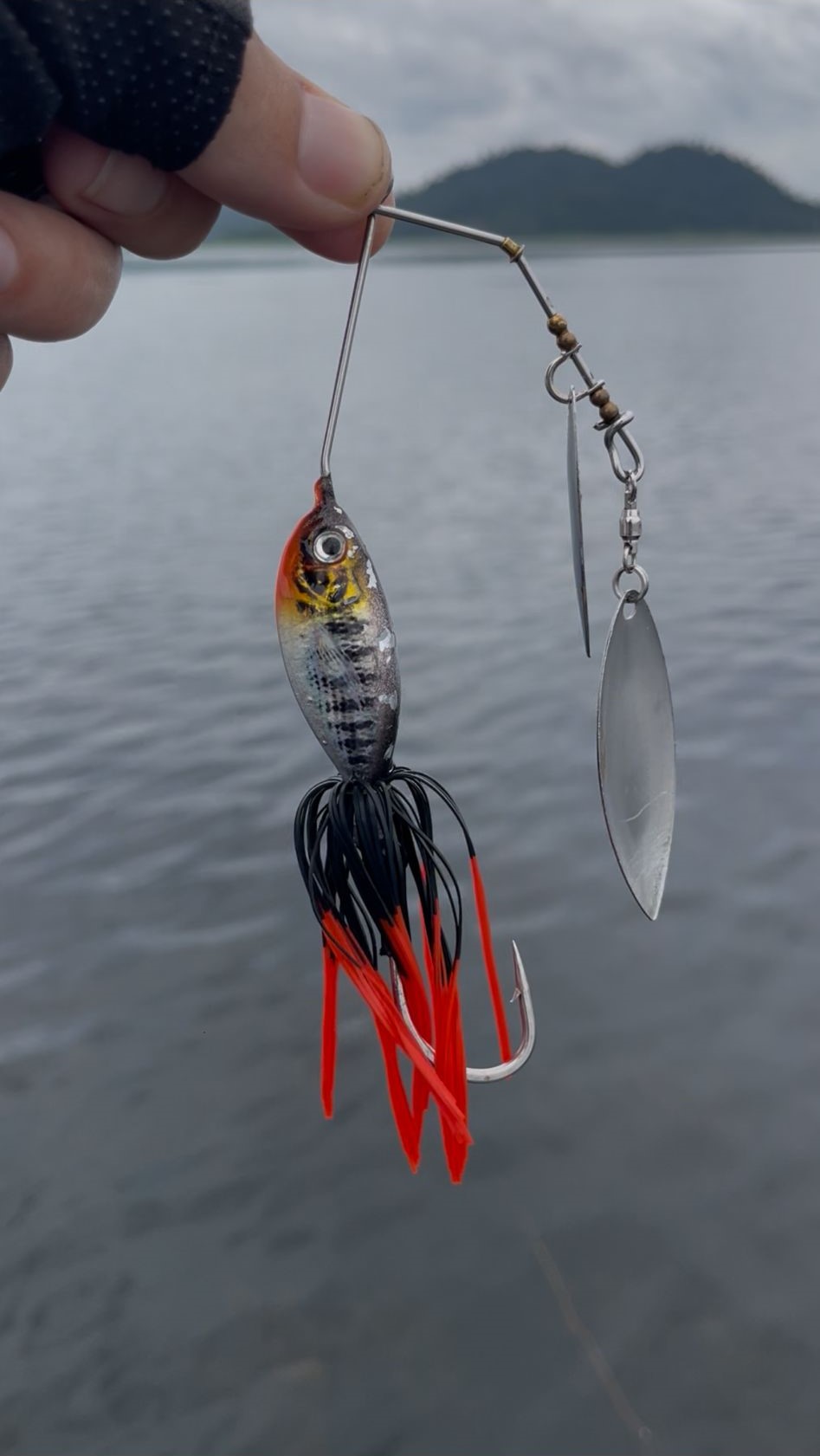
Once the fish buried itself deep into the flooded grass, I switched immediately to a 33-gram double-bladed spinnerbait.
That lure gave me two advantages:
Weed Resistance
The spinnerbait could punch through gaps in the grass without constantly snagging.
Slower Vertical Presentation
I could cast directly onto the fry ball and let the bait sink naturally into the strike zone.
That turned out to be critical.
Instead of burning retrieves across the surface, I started dropping the spinnerbait directly into the pockets where she was holding.
That’s when the hookup finally happened.
Hook Sets Matter With Giant Snakehead
A lot of anglers lose giant snakehead because they underestimate how hard their mouths are.
When she ate the spinnerbait, I drove the hook home multiple times — not just once.
Two or three hard hook sets are often necessary, especially when fishing heavy tackle and thick cover.
These fish surge hard immediately after hookup, and if the hook doesn’t fully penetrate, they’ll throw it during the first violent run.
This fish stayed low and bulldogged through the grass the entire fight.
Heavy pressure was the only way to keep control.
Why Rainy Season Fry Balls Are Prime Targets
Thailand’s rainy season changes giant snakehead behavior completely.
As reservoirs rise and flood shoreline vegetation, snakehead move into grassy pockets and tree lines to spawn and protect their fry.
Those fry balls become high-percentage targets for anglers willing to slow down and stay patient.
The mistake most anglers make is leaving too early.
Sometimes the fish won’t commit immediately. You may need repeated casts from different angles before triggering the reaction strike.
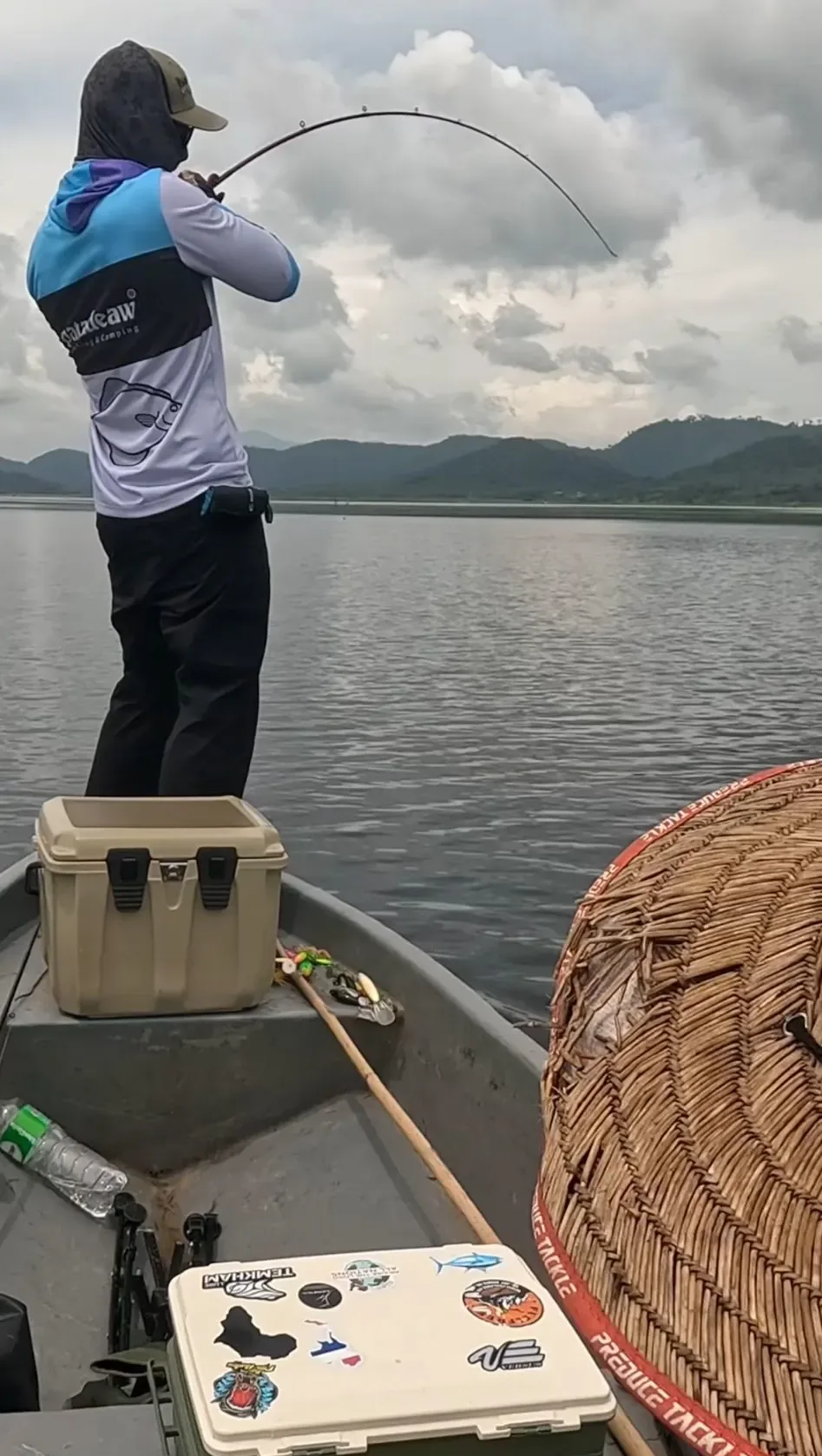
Josh’s Pro Tip
When fishing fry balls for giant snakehead, patience matters more than lure changes.
Stay on the fish.
If she blows up and misses or refuses the lure, don’t immediately leave the area. Adjust the presentation angle, change sink rate, or switch to something more weedless.
And when the bite finally comes, set the hook hard multiple times to punch through that bony mouth.
Recommended Setup for Thailand Giant Snakehead
Rod
Medium-heavy to heavy baitcasting rod with strong backbone.
Reel
High-speed baitcaster capable of quickly picking up slack after explosive strikes.
Line
50–65 lb braided line for pulling fish out of flooded grass and timber.
Lures
- Spinnerbaits
- Weedless frogs
- Shallow crankbaits
- Soft plastic swimbaits
- Buzzbaits during low light
Related reading
For more Thailand snakehead tactics, read:
- How to Target Momma Snakehead with Spinnerbaits
- An Early Start to the Fryball Season in Chanthaburi
- How to Sight Cast for Giant Snakehead in Thailand
Conclusion
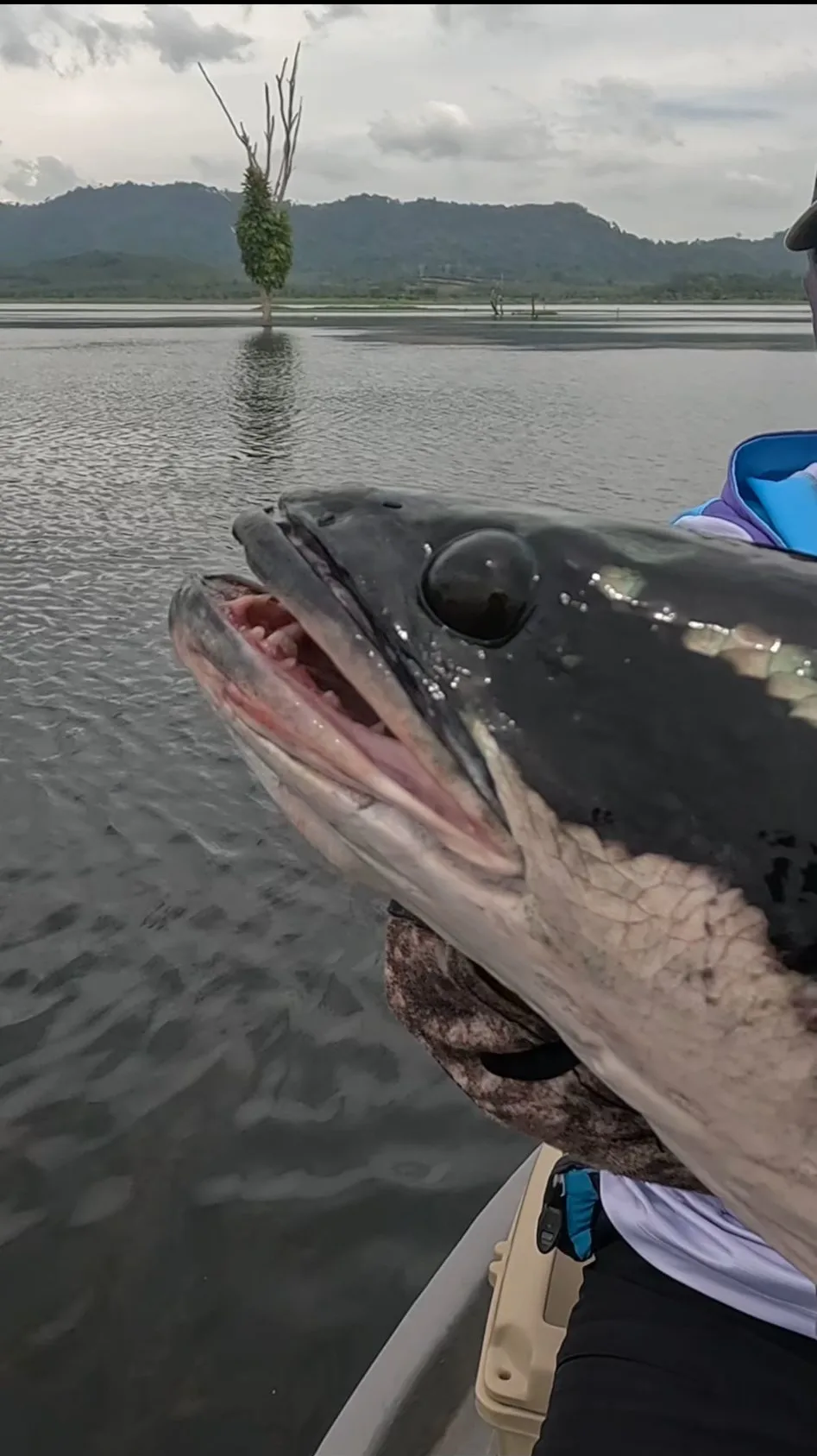
Targeting a giant snakehead around fry balls during Thailand’s rainy season is one of the most technical freshwater fishing situations you’ll encounter.
The fish are aggressive, territorial, and incredibly powerful, but success usually comes from persistence rather than nonstop action.
Stay tight to the cover, adjust your lure selection when conditions change, and commit fully to the hook set.
If you’re planning a rainy season trip, flooded reservoirs in Chanthaburi are one of the best places to start.
FAQ
What time of year is best for giant snakehead fishing in Thailand?
The rainy season is typically best because rising water levels push fish into flooded grass and shoreline cover where they spawn and guard fry balls.
Why do giant snakehead stay near fry balls?
The adult fish aggressively protect their young from predators, making them highly territorial and willing to attack lures entering the area.
What lure works best around heavy grass?
Spinnerbaits and weedless frogs are usually the safest options because they can move through flooded vegetation without constantly snagging.
How hard should you set the hook on giant snakehead?
Very hard. Multiple hook sets are often necessary because giant snakehead have thick, bony mouths that are difficult to penetrate cleanly.
Is Chanthaburi good for giant snakehead fishing?
Yes. Chanthaburi reservoirs can fish extremely well during the rainy season when flooded shoreline cover creates ideal spawning habitat for giant snakehead.